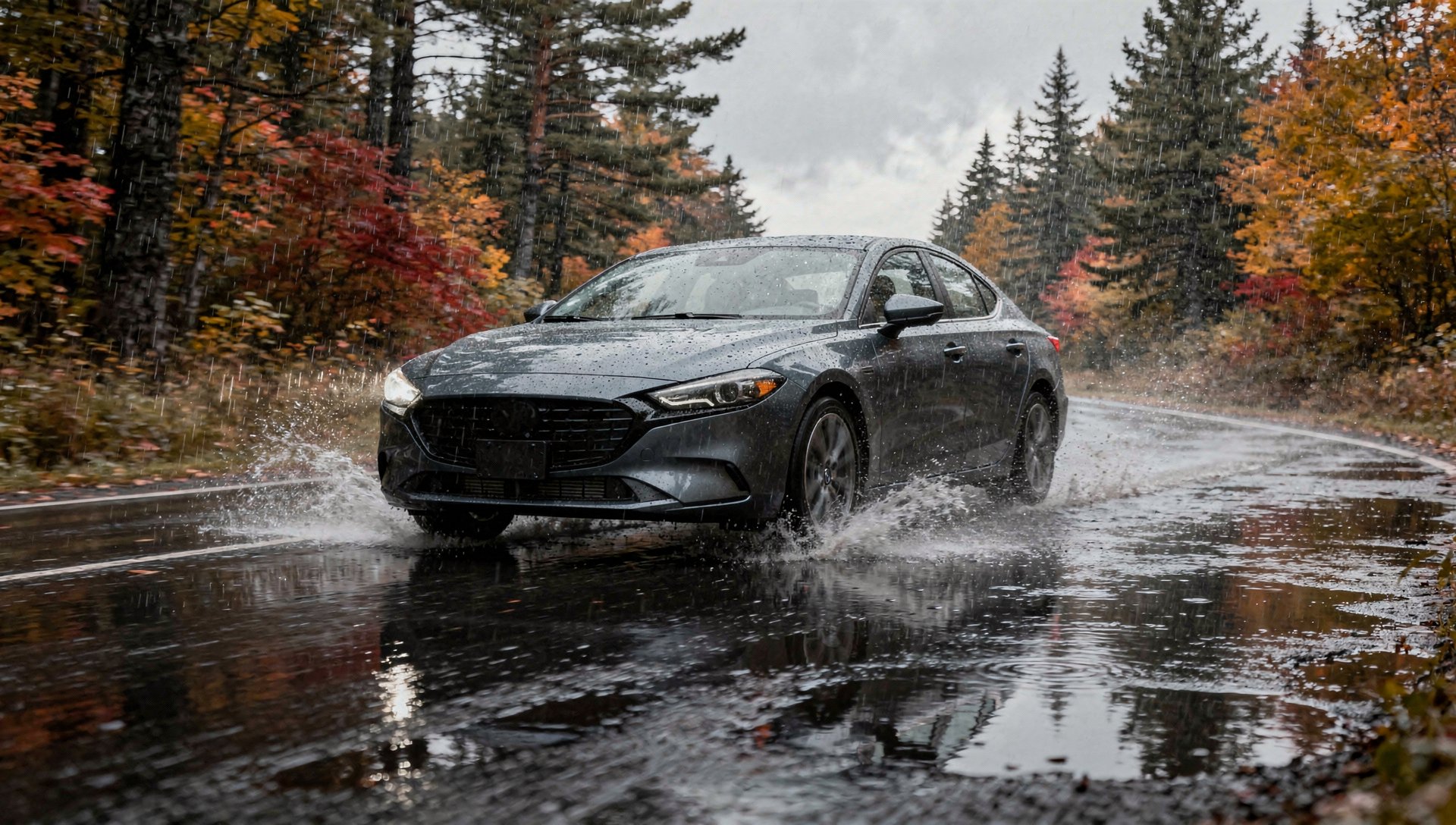
Driving through a Canadian winter presents challenges that many newcomers have never experienced. In Quebec, snow and ice transform familiar roads into environments that demand specific skills, proper preparation, and a different mindset behind the wheel. Whether you recently arrived in Canada or you're a beginner preparing for your first winter season, understanding how to navigate these conditions is essential for your safety, and for everyone sharing the road with you.
This isn't just about comfort or convenience. A coroner's report following a fatal collision in Princeville in January 2025 brought renewed attention to the risks newcomers face when driving on Quebec roads without adequate winter driving preparation. The victim, a 29-year-old newcomer from Mexico, lost control of his vehicle during a snowstorm with blowing snow, poor visibility, and slippery conditions. Witnesses reported that vehicles around him were still traveling at the posted 90 km/h. The coroner recommended that the SAAQ strengthen its approach to preparing foreign drivers for winter, and since June 2025, new rules require foreign licence holders who fail the practical exam to drive with a learner's permit until they pass.
At Tecnic, we share that commitment. With over 40 years of experience training Quebec drivers and more than 80,000 successes annually, we understand what newcomers need to drive confidently in winter. The good news? Winter driving is a learned skill. With the right knowledge and practice, you can navigate Quebec's coldest months with confidence. This guide covers everything you need to know.
Understanding Quebec winter road conditions
Before heading out, newcomers should recognize the four main hazards they'll encounter on Quebec roads during winter.
Types of winter road hazards
Compact snow forms a packed layer on road surfaces, particularly common on secondary roads between plowing cycles. Slush appears when temperatures rise slightly, creating a heavy, wet mixture that can pull your vehicle sideways unexpectedly. Black ice remains the most dangerous condition: a thin, transparent layer that looks identical to wet pavement but offers almost no traction. Finally, whiteouts occur during heavy snowfall or blowing snow, reducing visibility to near zero.
Black ice forms first on bridges, overpasses, and open sections exposed to wind. Temperatures hovering around 0°C create the most dangerous conditions for ice formation. Understanding Quebec's Highway Safety Code helps you navigate these challenges legally and safely.
Quebec winter tire laws: what you need to know
Quebec maintains strict regulations regarding winter tires that differ from most other Canadian provinces and U.S. states. Compliance is not optional for vehicles registered in Quebec.
Mandatory winter tire period and requirements
Winter tires are mandatory in Quebec from December 1 to March 15. During this period, driving without proper winter tires can result in fines ranging from $200 to $300. To be compliant, tires must display the Three-Peak Mountain Snowflake (3PMSF) symbol or be studded. Tires marked only with the M+S (mud and snow) designation do not meet Quebec's legal requirements.
Studded tires are permitted from October 15 to May 1, giving drivers additional options for extreme conditions.
Why do winter tires provide such superior performance? All-season tires lose grip below +7°C as their rubber compound hardens. Winter tires use specialized compounds that remain flexible in cold temperatures, maintaining traction when you need it most. The Quebec government recommends a minimum tread depth of 4.8 mm for effective winter performance.
| Requirement | Dates | Penalty |
| Mandatory winter tires (3PMSF or studded) | December 1 to March 15 | $200 to $300 fine |
| Studded tires permitted | October 15 to May 1 | N/A |
| Minimum tread depth recommended | All winter | 4.8 mm (safety concern) |
Preparing your car for winter driving
Proper vehicle preparation goes beyond installing winter tires. Several critical checks ensure your car performs safely in harsh conditions.
Essential vehicle checks
Your windshield washer fluid must be rated for -30°C to -40°C. Summer fluid freezes and leaves you without visibility when you need it most. Verify that wiper blades are in good condition, as worn blades struggle to clear snow and ice effectively. Keep your fuel tank at least half full to prevent fuel line freezing and ensure you're prepared for unexpected delays.
For electric vehicle owners, battery range decreases in cold weather. Plan for reduced range, charge more frequently, and accelerate gently: instant EV power can cause traction loss on slippery surfaces.
Building your winter emergency kit
Every vehicle in Quebec should carry an emergency kit throughout winter. If you become stranded, these items could prove essential: snow brush and ice scraper, small shovel, jumper cables and flashlight with extra batteries, warm blanket and extra clothing, cat litter or sand for traction, non-perishable snacks, water, and a phone charger.
Learn more about preparing for winter road trips to ensure you're ready for any situation.
Snow removal requirements and fines
Quebec law requires drivers to completely clear snow and ice from their vehicles before driving. This is not just about convenience. It is a safety requirement with significant penalties.
Legal requirements in Quebec
Fines for driving with a vehicle that is not properly cleared of snow and ice range from $60 to $100. If snow or ice on the vehicle reduces your ability to see, penalties increase to $100 to $200. Flying snow and ice from vehicle roofs cause accidents and can injure other drivers or pedestrians.
Complete your snow removal in this order: roof first (preventing snow from sliding onto your windshield while driving), then all windows and mirrors, hood and trunk, headlights and taillights, and finally licence plates. Check wheel wells for packed snow that can affect steering.
Essential safe driving techniques for winter
Adapting your driving style to winter conditions requires deliberate changes to habits that work fine in summer. These adjustments aren't optional. They could save your life.
Adjusting speed and following distance
The golden rule: slow down. Speed limits indicate maximum speeds under ideal conditions, and winter roads rarely qualify as ideal. Increase your following distance to at least six seconds, double or triple the normal three-second rule. This extended distance provides crucial reaction time on slippery surfaces.
Consider the "hot coffee" analogy: drive smoothly enough that a cup on your dashboard wouldn't spill. This mindset promotes the gentle acceleration, braking, and steering that winter conditions demand.
When to avoid cruise control
Never use cruise control on snowy or icy roads. This common mistake limits your ability to respond instantly to traction changes. Manual throttle control gives you better feel for road conditions and allows immediate adjustments when tires begin to slip. Our driving improvement courses cover these techniques so you can build the right reflexes before you need them on the road.
How to handle skids and black ice
Understanding how to control skidding could prevent a serious accident. Two types of skids require different responses, and knowing the difference matters when you only have a split second to react.
Front-wheel skidding (understeer)
When your car continues straight despite turning the wheel, your front tires have lost grip. Reduce pressure on the accelerator, wait for tires to regain traction, then steer gently toward your intended direction. Avoid sudden corrections.
Rear-wheel skidding (oversteer)
When the rear of your car swings out, take your foot off the gas and turn your steering wheel in the direction of the skid, toward where the rear is sliding. Look and steer where you want to go. Be prepared to make small corrections as the vehicle stabilizes.
The general principle for both situations: look where you want to go, steer where you want to go, and avoid panic braking. Reading about skid recovery is one thing, but practicing it in a safe environment is what builds real muscle memory. That's exactly what our skid control simulator is designed for.
Safety around snowplows and knowing when to stay home
Never pass snowplows or salt spreaders operating with flashing blue lights, especially when they are working in convoy. These vehicles have large blind spots and may slow or stop suddenly. Road conditions are usually safer behind a snowplow than ahead. Passing a snowplow convoy violates Québec’s Highway Safety Code.
Before traveling, check Quebec 511 for real-time road conditions. During severe weather, the safest choice may be staying home. Postponing non-essential travel during storms is not overcautious. It is smart. The Princeville collision happened during rush hour when conditions were already dangerous enough that police were managing multiple incidents. If conditions deteriorate while driving, find a safe place to stop and wait for improvement.
Building your winter driving confidence
Practice builds confidence faster than reading alone. Find a large, empty parking lot and test braking distances on snow, practice gentle turns, and learn how your vehicle responds to slippery surfaces at moderate speeds.
For structured, hands-on learning, Tecnic offers defensive driving courses on slippery surfaces featuring a skid control simulator that's exclusive to North America. The training begins with a two-hour block of group theory, followed by individual practice on the simulator. You'll work through slalom exercises, basic skid recovery, and emergency braking scenarios, all in a controlled environment where mistakes are part of the learning process, not a safety risk.
Our expert trainers can even travel across Quebec with the simulator truck to deliver training at workplaces, an option that's popular with employers who want to keep their teams safe on the road.
New SAAQ rules for foreign licence holders (2025–2026)
If you're a newcomer to Quebec, understanding the current licensing rules is critical. Newcomers can drive with a valid foreign licence for up to six consecutive months after arriving in Quebec. During this period, your foreign driving experience must be recognized by the SAAQ for you to continue driving legally in the province.
Since June 2025, the SAAQ has implemented stricter requirements following the coroner’s recommendations. These measures apply specifically to newcomers who are converting a foreign driver’s licence and who fail the practical driving exam. In such cases, the person must now drive with a learner’s permit until they pass. This means being accompanied at all times by a licensed driver who has held their licence for at least two years, with a minimum four-week waiting period before retaking the exam.
These changes exist to ensure that every driver on Quebec roads can handle our unique winter conditions. At Tecnic, we've designed our complete driving courses for newcomers specifically to address these challenges. Our certified instructors speak multiple languages, including French, English, Spanish, Arabic, and Haitian Creole, so you can learn in the language you're most comfortable with. We also offer refresher courses and specialized winter driving training to help you succeed on both the road test and real Quebec roads.
At Tecnic, we've been helping Quebec drivers succeed for over 40 years. Whether you're a newcomer preparing for your first Canadian winter or an experienced driver looking to sharpen your skills, our certified instructors are here to help. Contact your nearest Tecnic school today and start your journey with confidence.
Frequently asked questions about winter driving in Quebec
Are winter tires mandatory in Quebec?
Yes. Winter tires bearing the Three-Peak Mountain Snowflake symbol (or studded tires) are required from December 1 to March 15 for vehicles registered in Quebec. Driving without proper winter tires during this period results in fines ranging from $200 to $300.
What is a safe following distance in winter?
Maintain at least six seconds of following distance from the vehicle in front. That means double or triple the normal three-second rule used in good road conditions.
How do you recover from a skid on ice?
Take your foot off the gas, avoid sudden braking, and steer gently in the direction you want to go. For rear-wheel skids, turn your steering wheel toward where the rear of your car is sliding. For hands-on practice, Tecnic's skid control simulator lets you experience and master these techniques in a safe environment.
What should I keep in my car for winter emergencies?
Essential items include a snow brush, ice scraper, small shovel, jumper cables, flashlight, warm blanket, extra clothing, cat litter or sand, non-perishable snacks, water, and a phone charger.
Can newcomers drive in Quebec with a foreign licence?
Newcomers may drive temporarily with their foreign licence for up to six consecutive months after arriving in Quebec. After that, your foreign experience must be recognized by the SAAQ. Since June 2025, newcomers who fail the practical exam must drive with a learner's permit until they pass. Contact the SAAQ for details on licence conversion requirements and timelines.
Do visitors from Ontario or the USA need winter tires in Quebec?
The mandatory winter tire law applies to vehicles registered in Quebec. Vehicles registered outside the province are exempt. However, winter tires are strongly recommended for any vehicle driven in Quebec during winter, as all-season tires perform poorly in cold temperatures and on snow or ice.
Where can I take a winter driving course in Quebec?
Tecnic offers winter driving courses and defensive driving training on slippery surfaces at locations across Quebec. Our programs combine theory with hands-on practice using a skid control simulator exclusive to North America. With over 200 schools province-wide, you'll find a Tecnic location near you.